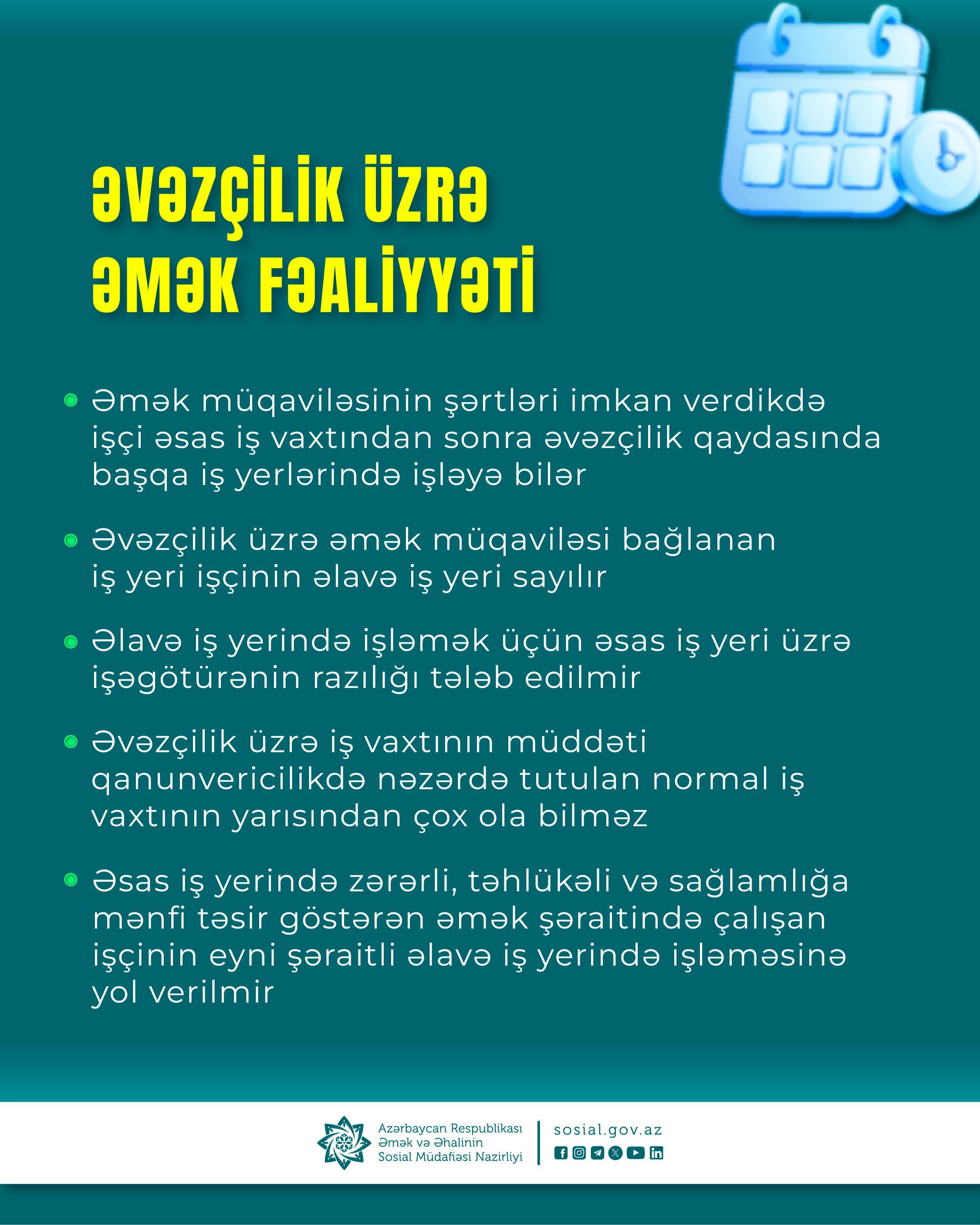
According to the Labour Code, when the terms of an employment contract allow, an employee may work after their main working hours both at their primary workplace and at other workplaces through secondary employment. The workplace where an employment contract is concluded for secondary employment is considered the employee’s additional workplace.
The duration of working hours under secondary employment is determined by agreement between the parties and may not exceed half of normal working hours. Normal daily working hours may not exceed 8 hours, while weekly working hours may not exceed 40 hours.
The employee does not need the consent of the employer at their primary workplace to work through secondary employment at an additional workplace after working hours. During working hours, however, such employment is permitted only with the employer’s consent. The terms of working conditions and the scope of the work duties are determined by agreement between the parties.
All provisions of labour legislation apply to employees working through secondary employment, subject to the exceptions provided for by law.
An employee who works under harmful, hazardous or health-damaging working conditions at their primary workplace is not permitted to work through secondary employment at an additional workplace under the same conditions.
Employees under the age of 18 may work through secondary employment only if the total daily working hours at their primary and additional workplaces do not exceed the reduced working hours established for them.
It should be noted that reduced working hours may not exceed 24 hours per week for employees under the age of 16, and 36 hours per week for employees aged 16–18, persons with disabilities due to a 61–100 percent impairment of body functions, pregnant women and women with a child under one and a half years of age, as well as parents raising a child under the age of 3 on their own.
In cases provided for by legislation, the right to work at an additional workplace through secondary employment does not apply to relevant officials of state bodies.