Analyses show that artificial intelligence will have a greater impact on professions requiring higher and academic education. It does not have such a significant impact on vocational education, which means that demand for vocational education will remain for a longer period.
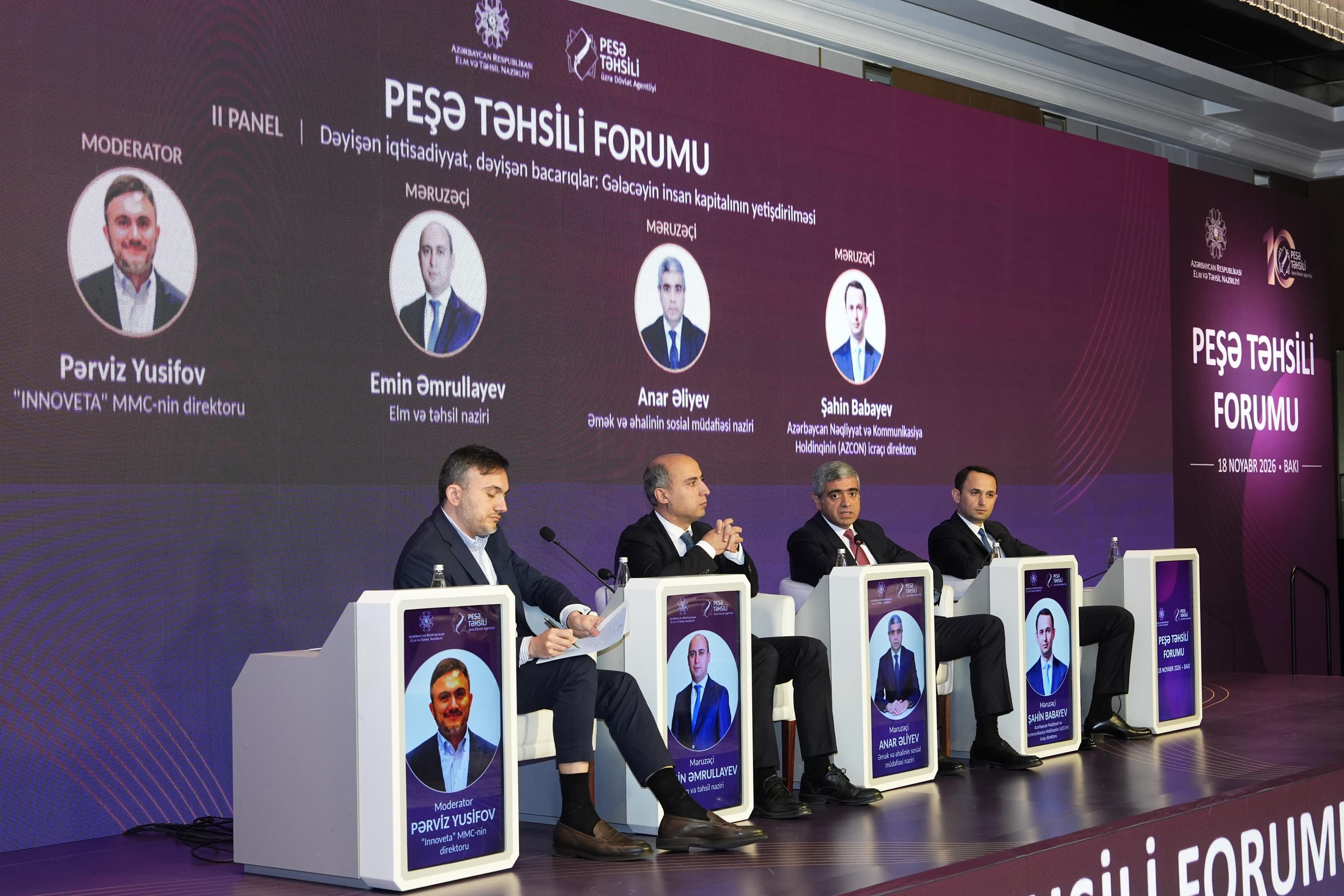
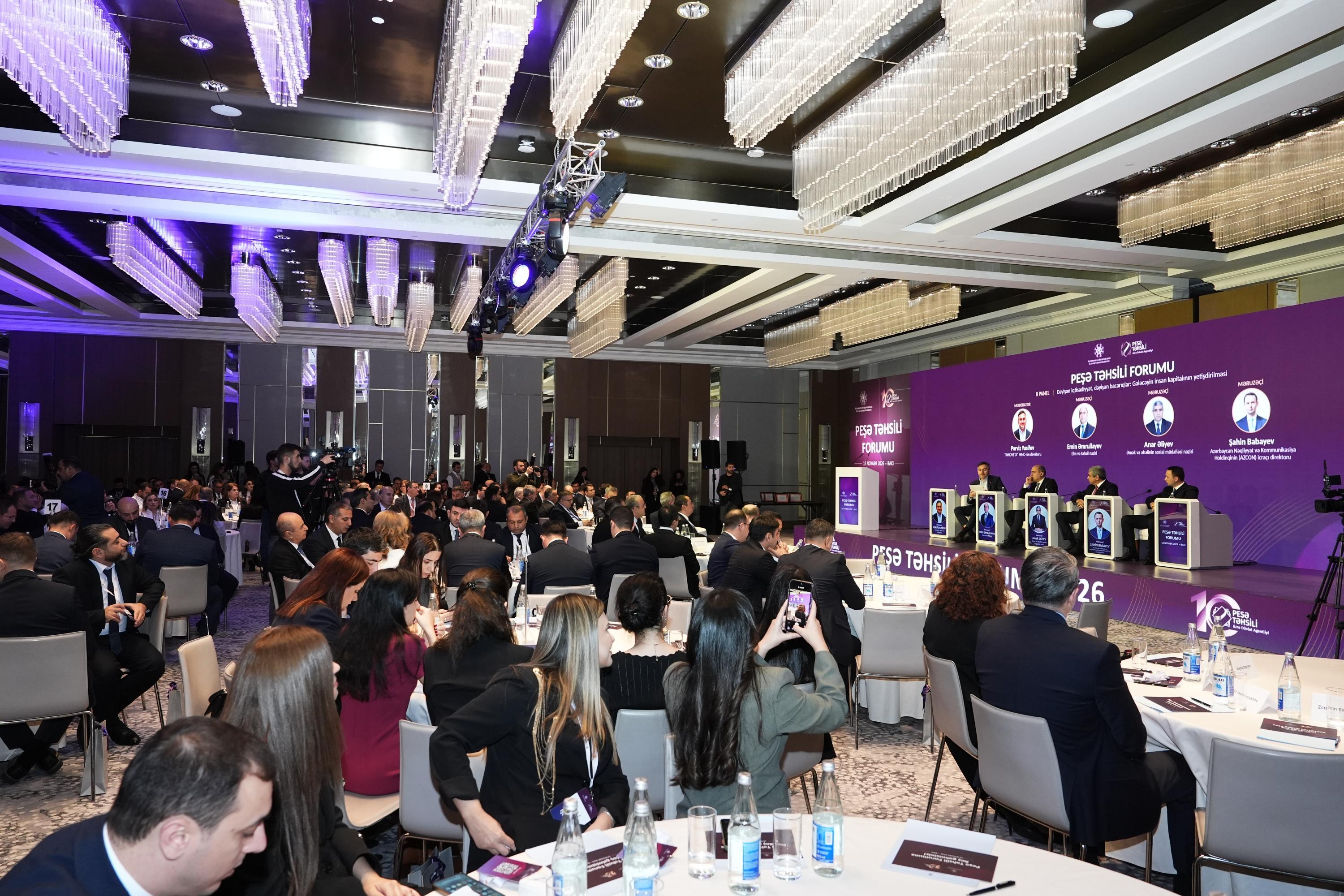
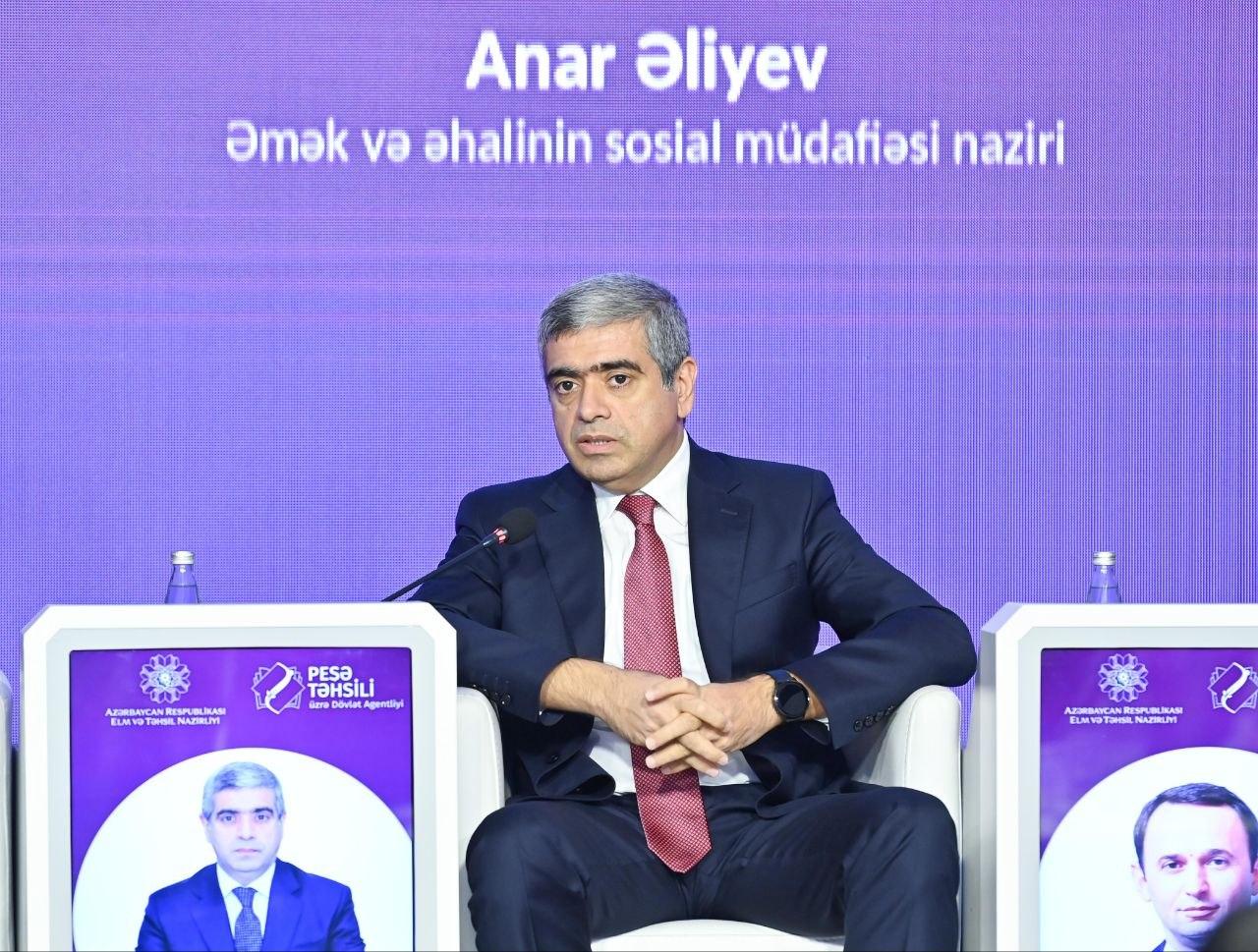
This was stated by Minister of Labour and Social Protection of Population Anar Aliyev while answering questions during the panel discussion entitled “A Changing Economy, Changing Skills: Developing the Human Capital of the Future”, held within the framework of the “Vocational Education Forum 2026”.
He noted that the important point is to ensure that a workforce meeting employers’ requirements enters the labour market. The ultimate beneficiary of our vocational education system is the labour market. Therefore, as the Ministry of Labour and Social Protection of Population, we see the development priorities of vocational education, including the development of vocational training implemented by the Ministry, in aligning vocational education and vocational training programmes with the requirements and standards of the international labour market.
Noting that an individual's professional development is primarily associated with improving their skills, the Minister emphasised that the process of developing occupational and qualification standards in line with the requirements of the international labour market is underway. He also pointed out that Ministry of Labour and Social Protection of the Population has already developed more than 1,000 occupational and qualification standards and included them in the Ministry's register.
Anar Aliyev stated that the State Employment Agency under the Ministry works with nearly 500,000 unemployed and job-seeking persons annually. An important part of this work involves teaching the workforce the knowledge and skills required by the labour market, enhancing their knowledge and skills, and connecting these individuals with employers. Career guidance counselling is also an extremely important tool in this regard. Our children and students should know from an early age which fields they may pursue in the future and in which sectors of the labour market they may work.
Stating that approximately 18,000–20,000 people are enrolled in vocational training courses by the Ministry every year, Anar Aliyev emphasised that a per capita financing mechanism was introduced in vocational training in 2019, which has led to expanded cooperation with the private sector in this field. He noted that the target is to increase the annual number of people enrolled in vocational training to 25,000 by 2030.
The Minister noted that systematic and consistent measures have been implemented in Azerbaijan since 2017 to reduce informal employment. He stated that, as a result of these measures, the number of employment contracts in the country had increased by nearly 600,000, representing an increase of approximately 46–47 per cent. At the same time, the wage fund had more than tripled.
Anar Aliyev said that the increase in the level of formal employment had also created new opportunities to enhance the knowledge and skills of the workforce, adding that employers were also undertaking certain activities to improve the knowledge and skills of employees with whom employment contracts had been concluded.
He stated that ensuring employment in the liberated territories is one of the main areas of activity of the Ministry of Labour and Social Protection of Population, and that regular meetings are held at the Ministry with employers operating in Karabakh and East Zangezur. He noted that, within the framework of this cooperation, workers are placed in vacancies available at these employers, while vocational courses are also organised to provide the workforce with the knowledge and skills required for these vacancies.